How SOTO Consulting Engineers Streamlined Steel Connection Design with IDEA StatiCa

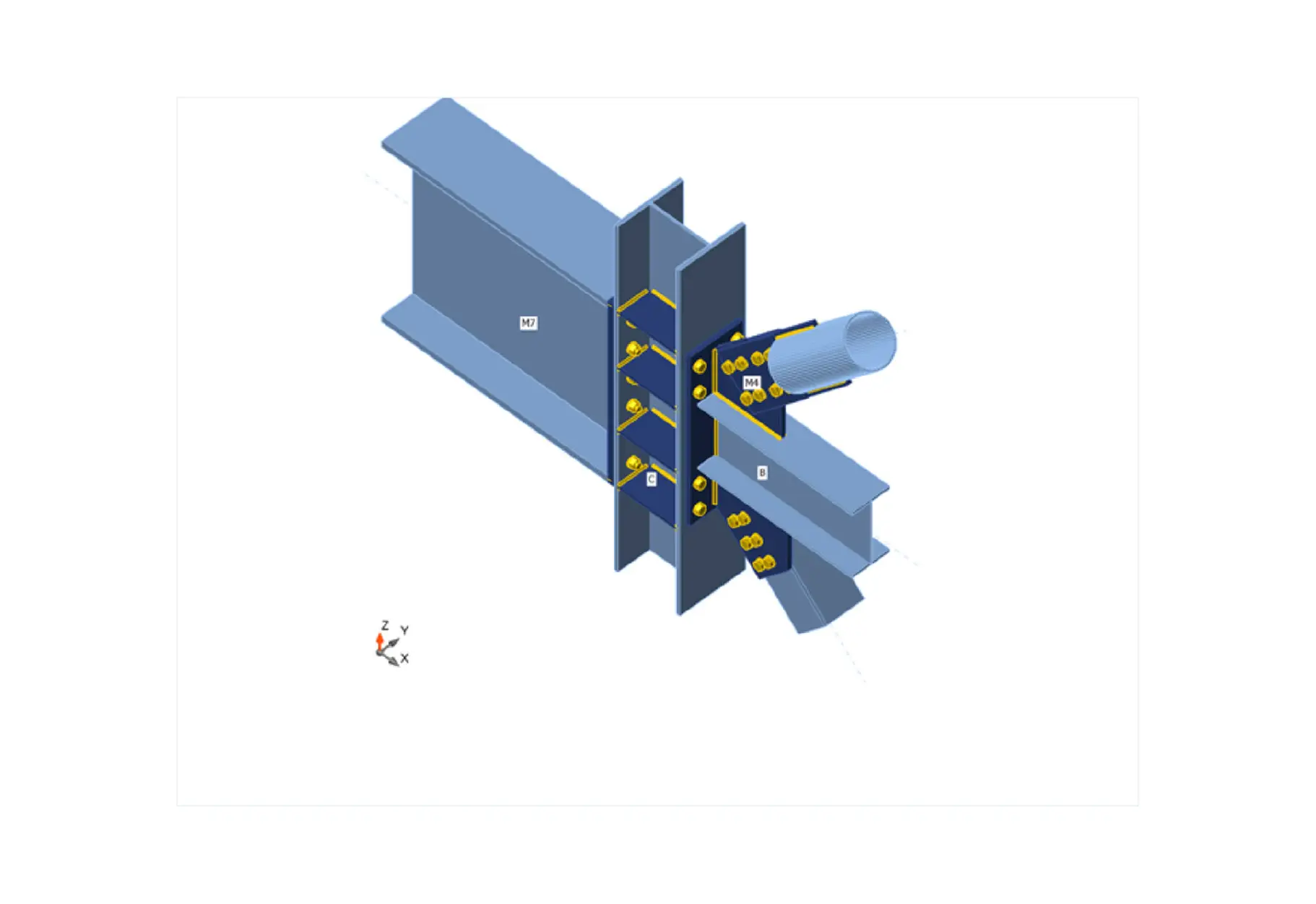
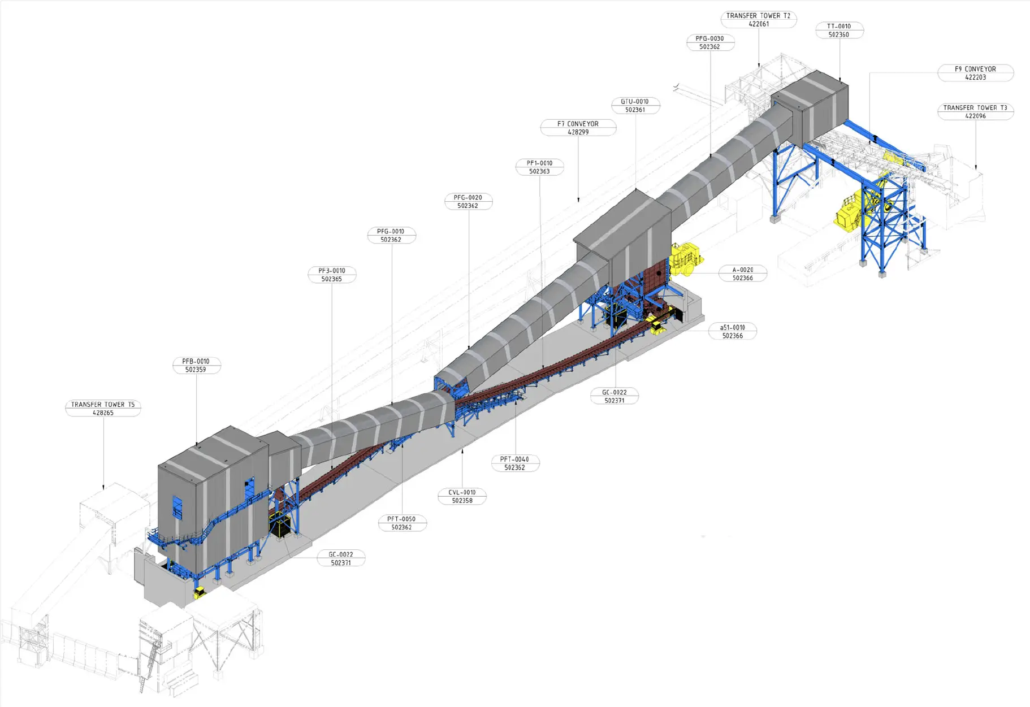
When SOTO Consulting Engineers (SOTO) was engaged to deliver the detailed structural design of a large-scale bulk materials handling system, the team faced a common challenge in complex industrial projects: designing and verifying non-standard steel connections within a highly constrained environment.

The project comprised multiple conveyors, transfer towers, storage bins, hoppers, and supporting steel structures, with a total steel weight exceeding 300 tonnes. Much of the new infrastructure also needed to integrate with existing plant and mechanical equipment, resulting in tight geometric constraints and complex load paths.

These project conditions made conventional connection details impractical, requiring advanced structural analysis and connection design to accurately assess performance, optimise detailing, and verify compliance with engineering standards.
SOTO IdeaStatica Case Study

The Challenge

Complex industrial structures often involve steel connections where multiple members intersect under varying loads and interaction effects. These critical connection points can quickly become a design bottleneck, as traditional component-based design methods rely on simplified assumptions that may not accurately reflect real-world structural behaviour.

To analyse these complex connections, engineers have historically relied on advanced finite element analysis (FEA) software such as ANSYS. While highly capable, this process is often time-consuming and resource-intensive, making it difficult to efficiently evaluate multiple design iterations and optimise constructability.

SOTO Consulting Engineers required a faster, more practical solution that would enable accurate analysis, rapid design iteration, and code-compliant verification of complex steel connections without sacrificing engineering confidence.

The Solution: An Integrated Workflow with IDEA StatiCa

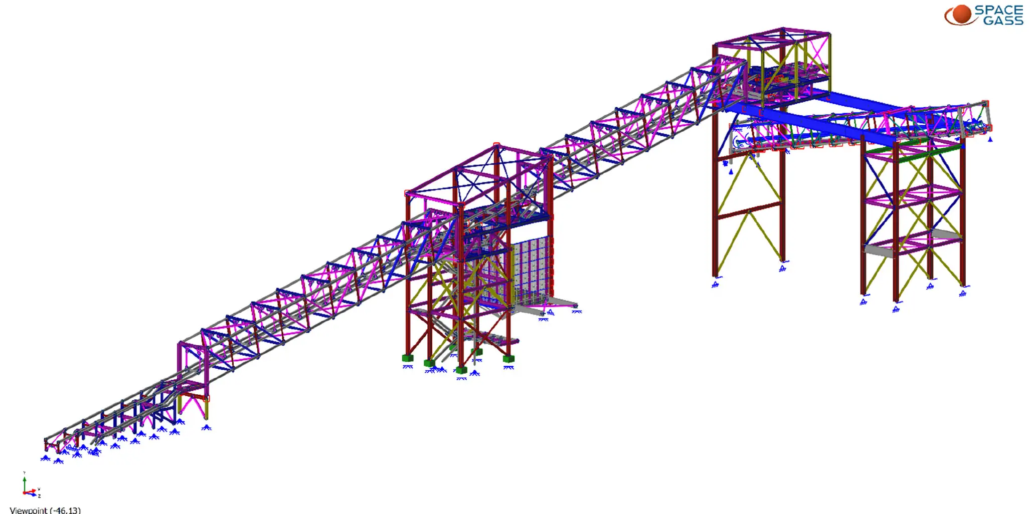
To address these challenges, SOTO implemented IDEA StatiCa as part of an integrated structural design workflow. The global structure was first analysed in SPACE GASS to determine overall behaviour and generate nodal forces. These forces were then exported directly into IDEA StatiCa, allowing engineers to design and verify connections within a consistent and connected environment. 

This workflow enabled simultaneous assessment of all members framing into a single node under equilibrium-consistent loading. Rather than isolating individual elements, engineers could analyse complete connection behaviour in a way that more accurately reflects how forces are transferred through the structure. 

For engineers interested in learning more about the workflow between SPACE GASS and IDEA StatiCa, BuildingPoint has recorded a webinar demonstrating the integration and connection design process. View the Webinar →

SOTO IDEA StatiCa Case Study

Advanced Connection Verification

Using IDEA StatiCa, SOTO Consulting Engineers carried out detailed stress analysis and buckling verification for complex steel connection arrangements. The software enabled the team to assess the combined effects of multiple interacting members on both the connection itself and the supporting structural elements.

By accurately modelling these interactions, SOTO gained a more realistic understanding of connection performance, localised yielding, and the buckling behaviour of supporting members. This level of analysis was particularly valuable in heavily loaded areas, where these factors played a critical role in determining the final design and ensuring structural compliance.

SOTO IDEA StatiCa Case Study

Rapid Design Iteration and Improved Efficiency

One of the key benefits of IDEA StatiCa was its ability to significantly streamline the steel connection design process. Engineers could quickly modify connection geometry, member configurations, and detailing within a single integrated environment, making it easy to evaluate multiple design options and optimise solutions.

Compared with traditional finite element analysis (FEA) workflows, IDEA StatiCa dramatically reduced the time required to analyse, refine, and verify complex steel connections while ensuring compliance with relevant Australian Standards. This rapid design iteration proved especially valuable on a project of this scale, where evolving design constraints and tight spatial requirements demanded frequent adjustments.

Incorporating Real-World Behaviour with Stiffness Analysis

In addition to detailed connection design, SOTO Consulting Engineers used IDEA StatiCa’s stiffness analysis capabilities to evaluate the rotational stiffness of critical steel connections. These stiffness values were then incorporated into the SPACE GASS structural model, allowing the team to accurately simulate semi-rigid connection behaviour and achieve a more realistic representation of the overall structure.

This approach was particularly valuable in the design of a fan support structure subjected to dynamic loading. By incorporating connection stiffness into the global analysis model, SOTO refined the structure’s natural frequency relative to the fan’s primary forcing frequency, improving confidence in its dynamic performance. The analysis also confirmed that changes to the bracing arrangement—required to enhance maintenance access—could be implemented without compromising structural integrity or performance.

The Outcome

By leveraging IDEA StatiCa, SOTO Consulting Engineers efficiently developed practical, buildable steel connection solutions throughout the project, including complex areas where standard connection details were not suitable.

The software enabled faster design iterations, improved engineering confidence, and provided a deeper understanding of real-world connection behaviour. Ultimately, it helped the team deliver safe, code-compliant, and constructible engineering solutions while meeting the demanding constraints of a large-scale industrial materials handling project.

“IDEA StatiCa has proven to be a highly effective tool for complex connection design. With the ability to assess non-standardised connections where multiple members frame into a single node with complex load interactions, it provides a high level of confidence in both connection performance and the resulting behaviour of the structure. The inclusion of stiffness analysis to support semi-rigid connection design allows this behaviour to be incorporated directly into global models without the need for more detailed and time-consuming FEA.”

Tim FullerSenior Structural Engineer – SOTO Consulting Engineers
Tim Fuller
SOTO logo

At BuildingPoint, we help engineering teams across Australia and New Zealand implement digital structural engineering solutions that improve efficiency, accuracy, and design confidence. Tools like IDEA StatiCa enable engineers to seamlessly connect global structural analysis with detailed steel connection design, creating a more efficient and reliable engineering workflow.

This project demonstrates how the right technology can reduce reliance on time-consuming manual modelling, accelerate design iterations, and simplify the verification of complex steel connections. The result is a streamlined workflow that delivers practical, code-compliant solutions while providing greater confidence in structural performance—especially on complex industrial projects where traditional design methods can become a bottleneck.

Want to know more about our products? Talk to an expert